
For owner-operators and fleet managers in Central Florida, alignment is not just a maintenance item — it’s a cost-control strategy.
At Top Rides, a semi truck repair shop in Orlando, FL, we routinely see trucks with premature tire wear, steering instability, and poor fuel economy — all traced back to improper alignment.
Here’s what you need to know about semi truck alignment, when it’s necessary, and how the process works.
What Is Semi Truck Alignment?
Semi truck alignment is the precise adjustment of axle geometry to ensure all wheels track correctly relative to:
- The truck’s centerline (thrust angle)
- The road surface
- Each other
Unlike passenger vehicles, heavy-duty trucks involve:
- Steer axle alignment
- Drive axle alignment
- Trailer alignment (when applicable)
Proper alignment ensures that the truck rolls efficiently, minimizes tire scrub, and maintains predictable steering behavior.
Why Alignment Is Critical for Heavy-Duty Trucks
A Class 8 truck operating through Orlando’s highways — especially I-4 and Florida’s turnpike corridors — experiences constant load shifts, road crown variation, and heat cycling.
Misalignment can lead to:
- Rapid tire wear (thousands of dollars lost)
- Increased rolling resistance
- Steering pull
- Driver fatigue
- Reduced fuel economy
- Suspension component stress
Even a slight misalignment in a tandem axle setup can cost significantly over time.
Signs Your Semi Truck Needs Alignment
If you notice any of the following, it’s time to schedule an inspection:
1. Uneven or Rapid Tire Wear
- Feathering across tread blocks
- Inside or outside shoulder wear
- Diagonal or cupping patterns
Irregular wear is often the earliest indicator of alignment issues.
2. Steering Pull
If the truck consistently drifts left or right on a level road, alignment geometry may be off.
3. Off-Center Steering Wheel
If the wheel is not centered while driving straight, thrust angle misalignment may be present.
4. Increased Fuel Consumption
Improper toe settings or axle misalignment increase rolling resistance.
5. After Suspension or Steering Repairs
Alignment should always be checked after:
- Tie rod replacement
- Kingpin work
- Spring or bushing replacement
- Accident repairs
- Frame work
When Is the Right Time for Semi Truck Alignment?
For heavy-duty trucks in Florida conditions, consider alignment:
- Every 80,000–100,000 miles (preventative)
- After installing new steer tires
- After major suspension repairs
- Following a curb strike or pothole impact
- If involved in a collision
- When replacing leaf springs or torque arms
Preventative alignment can extend tire life by 20–30% when done correctly.
The Semi Truck Alignment Process
At Top Rides in Orlando, our alignment process follows a systematic approach:
1. Initial Inspection
We begin with:
- Suspension inspection (bushings, torque arms, U-bolts)
- Kingpin and ball joint checks
- Ride height verification
- Frame integrity inspection
Alignment adjustments are ineffective if worn components are present.
2. Measuring Axle Geometry
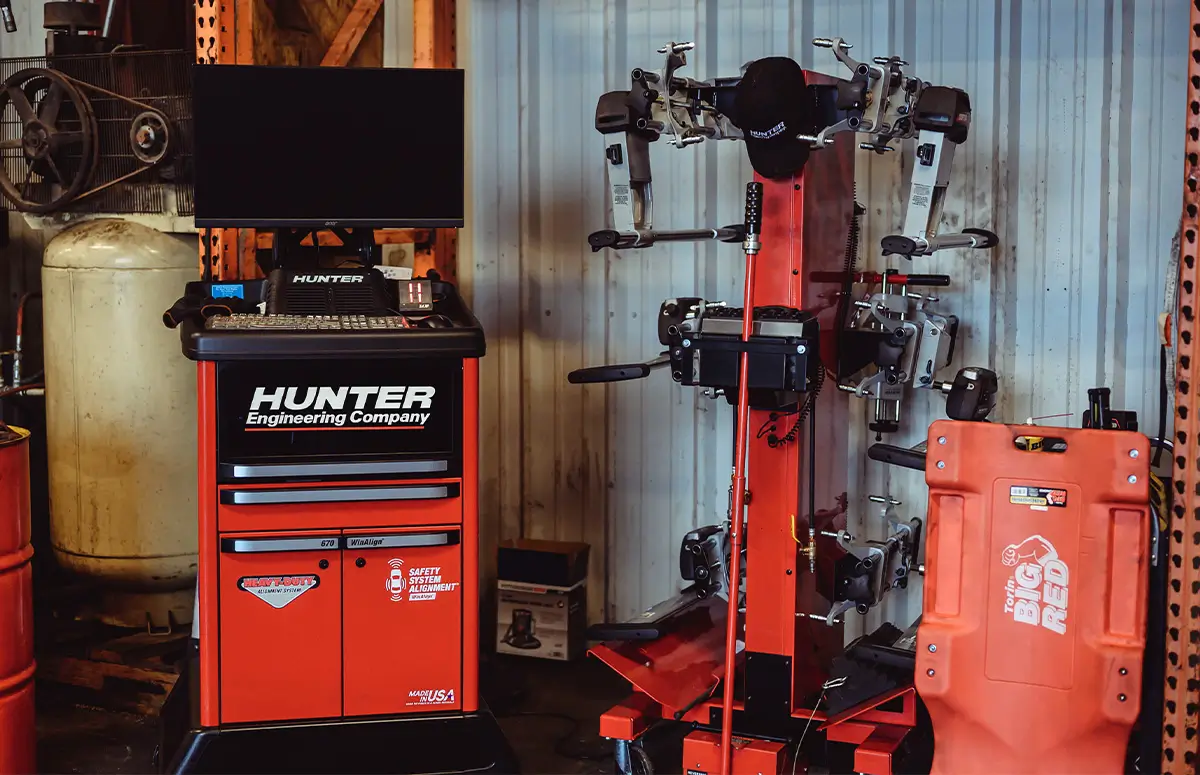
Using heavy-duty alignment equipment, we measure:
- Toe
- Camber
- Caster
- Thrust angle
- Tandem axle tracking
Drive axle alignment is particularly important because it establishes the truck’s thrust line.
3. Correcting the Drive Axles First
The drive axles must be aligned to the chassis centerline before adjusting the steer axle. If not corrected in proper sequence, steering pull will persist.
4. Steer Axle Adjustment
We adjust toe, camber, and caster to manufacturer specifications to ensure:
- Proper tire contact patch
- Stable steering
- Predictable return-to-center
5. Final Road Test
A road test confirms proper tracking and steering response.
Common Alignment Mistakes to Avoid
- Skipping suspension inspection before alignment
- Aligning only the steer axle while ignoring the drives
- Failing to correct ride height issues
- Not checking loaded vs. unloaded alignment geometry
Heavy-duty alignment is more complex than light vehicle alignment. Precision and sequence matter.
How Alignment Affects Your Bottom Line
Let’s break down the economics:
- Steer tires can cost $600–$900 each
- Drive tire sets can exceed $4,000
- Poor alignment can reduce tire life by 25% or more
In addition, improper alignment increases rolling resistance, reducing fuel efficiency — a major operational cost.
For trucks running high miles across Central Florida freight lanes, small geometry errors compound quickly.
Why Choose Top Rides for Semi Truck Alignment in Orlando, FL?
As a dedicated semi truck repair shop in Orlando, we understand heavy-duty geometry, load distribution, and drivetrain alignment — not just basic front-end adjustments.
We provide:
- Full axle alignment (steer and drives)
- Suspension diagnostics
- Post-repair alignment verification
- Alignment checks after accident damage
- Tire wear analysis
Our goal is simple: protect your tires, improve stability, and reduce operating costs.
Final Thoughts
Semi truck alignment is not just about steering feel — it’s about asset protection.
If you’re noticing tire wear, steering instability, or increased fuel costs, don’t wait. Misalignment becomes more expensive the longer it goes uncorrected.
For professional semi truck alignment in Orlando, FL, contact Top Rides and schedule an inspection today. Keeping your truck aligned keeps your business moving efficiently.